ChatGPT’s Growth Slows Amidst Rising Competition from Google’s Gemini
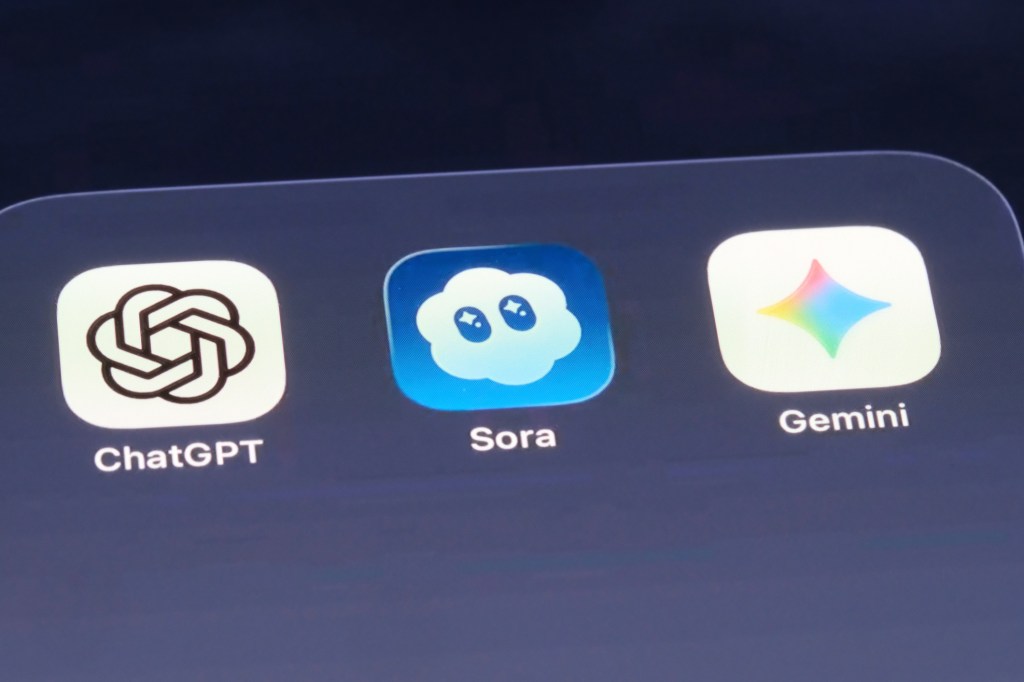
In the rapidly evolving landscape of artificial intelligence, OpenAI’s ChatGPT has been a dominant force, capturing significant market share and user engagement. However, recent data from market intelligence firm Sensor Tower indicates a deceleration in ChatGPT’s growth trajectory, coinciding with the ascent of Google’s AI chatbot, Gemini.
Current Market Position
As of November 2025, ChatGPT maintains a formidable presence, accounting for 50% of global mobile downloads and 55% of global monthly active users. This positions it as a leader in the AI chatbot domain. Despite this dominance, the platform’s growth rate has shown signs of tapering. Between August and November 2025, ChatGPT’s global monthly active users increased by approximately 6%, reaching around 810 million. This modest growth suggests that the platform may be approaching market saturation.
Emergence of Gemini
In contrast, Google’s Gemini has exhibited a more aggressive growth pattern. During the same August to November period, Gemini’s global monthly active users surged by about 30%. This spike is largely attributed to the introduction of its new image generation model, Nano Banana, which has resonated with users and driven increased adoption.
Furthermore, Gemini has effectively leveraged the Android ecosystem to bolster its user base. Data indicates that U.S. Android users are engaging with Gemini directly through the operating system at twice the rate compared to its standalone mobile app. This integration provides Google with a strategic advantage, especially in markets where Android holds a significant share.
Competitive Landscape
The AI chatbot market is becoming increasingly competitive, with several players vying for user attention. Perplexity and Claude, for instance, have reported triple-digit growth rates in 2025, with increases of 370% and 190% year-over-year, respectively. These developments underscore the dynamic nature of the market and the challenges incumbents like ChatGPT face in maintaining their lead.
OpenAI’s Response
Recognizing the intensifying competition, OpenAI has taken proactive measures. A recent internal memo from CEO Sam Altman, labeled as a code red, directed the team to prioritize enhancements in personalization, reliability, and image generation capabilities. This strategic pivot aims to address areas where competitors are gaining ground and to reinvigorate ChatGPT’s growth momentum.
Historical Context
ChatGPT’s journey has been marked by rapid adoption and expansion. After its November 2022 launch, the platform quickly amassed a substantial user base. By November 2023, it had reached 100 million weekly active users, doubling to 200 million by August 2024. The introduction of new models and features, such as GPT-4o with multimodal capabilities, further accelerated growth, pushing weekly active users to 400 million by February 2025.
Mobile App Performance
Despite its impressive growth, ChatGPT’s mobile app has shown signs of plateauing. Analyses indicate that new user growth, as measured by global downloads, began to slow after April 2025. Additionally, metrics such as average time spent per daily active user in the U.S. declined by 22.5% since July, and average sessions per daily active user decreased by 20.7%. These trends suggest that while the app retains a core user base, attracting new users and maintaining engagement levels are becoming more challenging.
Conclusion
The AI chatbot sector is at a pivotal juncture. While ChatGPT continues to lead in terms of user base and market share, the rapid ascent of competitors like Google’s Gemini signals a shifting landscape. For OpenAI, the path forward involves not only enhancing existing features but also innovating to meet evolving user expectations and staying ahead in a competitive market.