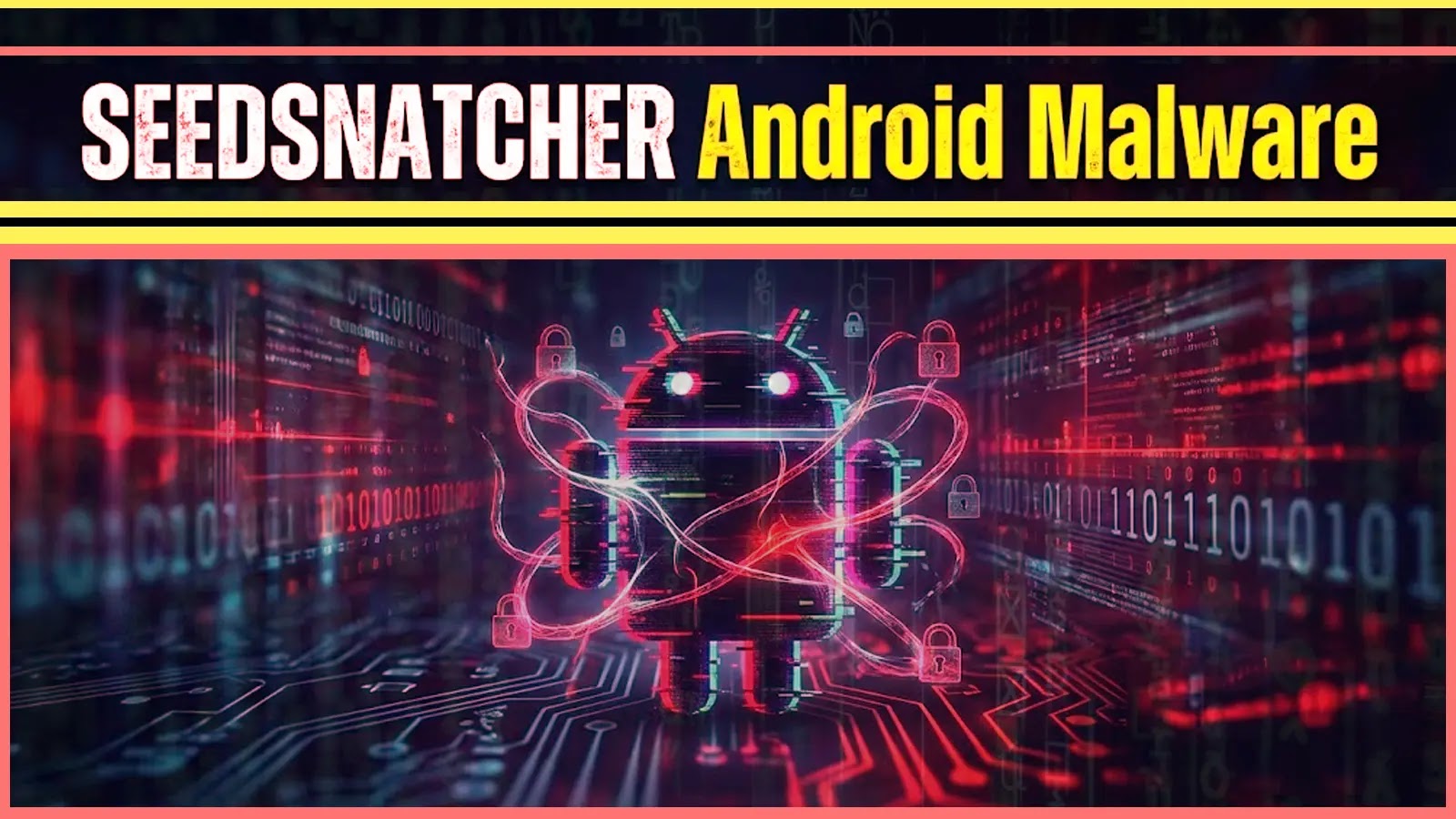
SeedSnatcher: The Sophisticated Android Malware Targeting Cryptocurrency Users
In the ever-evolving landscape of cyber threats, a new and highly sophisticated Android malware named SeedSnatcher has emerged, posing a significant risk to cryptocurrency enthusiasts worldwide. Disguised under the innocuous name Coin and disseminated through platforms like Telegram, SeedSnatcher is engineered to steal digital wallet recovery codes and execute remote commands on compromised devices.
Deceptive Distribution and Installation
SeedSnatcher’s distribution strategy is particularly insidious. The malware is packaged as a legitimate application and shared via Telegram channels, often accompanied by promotional messages that entice users to download and install the app. Once installed, the malware operates under the package name `com.pureabuladon.auxes`, initiating a series of actions designed to compromise the device.
Permission Escalation and Persistence
Upon installation, SeedSnatcher requests minimal permissions, such as access to SMS messages, to avoid raising immediate suspicion. However, it doesn’t stop there. The malware systematically escalates its privileges, gradually gaining access to more sensitive information and functionalities. This methodical approach ensures that the malware maintains a persistent presence on the device while minimizing the likelihood of detection by the user.
Advanced Evasion Techniques
SeedSnatcher employs a range of sophisticated techniques to evade detection and analysis:
– Dynamic Class Loading: The malware dynamically loads classes during runtime, making it challenging for static analysis tools to detect malicious code.
– WebView Content Injection: By injecting malicious content into WebView components, SeedSnatcher can execute arbitrary code and manipulate web content displayed to the user.
– Command Obfuscation: Instead of using descriptive operation names, the malware encodes command-and-control instructions as integers. This numeric obfuscation complicates the analysis process and hinders detection by security systems.
Real-Time Command and Control
A notable feature of SeedSnatcher is its use of WebSocket communication to maintain real-time, two-way communication with its command-and-control (C2) server. This setup allows the malware operators to issue commands and receive data instantaneously, facilitating efficient control over infected devices. The C2 server, identified as `apivbe685jf829jf[.]a2decxd8syw7k[.]top`, serves as the central hub for managing the malware’s operations.
Targeted User Interface and Localization
The user interface of SeedSnatcher is presented entirely in Chinese, indicating that the primary targets are Chinese-speaking individuals. This localization suggests that the threat actors behind the malware are either based in China or have a deep understanding of the Chinese market. The presence of numerous already-compromised devices in their control panel further indicates an active and operational campaign.
Financially Motivated Criminal Enterprise
The structure and operations of SeedSnatcher reveal a well-organized and financially motivated criminal enterprise. The distributed nature of the campaign, complete with commission structures that route money back to team leaders, underscores a professional approach to maximizing profits through systematic cryptocurrency theft. This level of organization and sophistication is indicative of a group with substantial resources and experience in conducting large-scale financial attacks.
Wallet Interface Spoofing and Seed Phrase Harvesting
One of the most dangerous capabilities of SeedSnatcher is its ability to create convincing fake cryptocurrency wallet interfaces. These spoofed interfaces are designed to trick users into revealing their critical seed phrases, which are essential for accessing and recovering digital assets. The malware includes a mapping system that directs users to counterfeit screens matching their preferred wallets, including:
– Trust Wallet
– TokenPocket
– imToken
– MetaMask
– Coinbase Wallet
– TronLink
– TronGlobal
– Binance Chain Wallet
– OKX Wallet
When a user opens one of these legitimate applications, SeedSnatcher’s overlay permission allows it to display a counterfeit import screen that appears virtually identical to the real wallet interface. This deceptive tactic increases the likelihood of users unknowingly entering their seed phrases into the malicious application.
Technical Implementation and Attention to Detail
The technical implementation of SeedSnatcher demonstrates remarkable attention to detail. For instance, in the case of Trust Wallet, the malware hardcodes the legitimate package name `com.wallet.crypto.trustapp` and uses matching UI elements to maximize deception. This meticulous approach ensures that the counterfeit interfaces are nearly indistinguishable from the genuine ones, increasing the effectiveness of the attack.
Implications and Recommendations
The emergence of SeedSnatcher highlights the growing sophistication of malware targeting the cryptocurrency sector. Users are advised to exercise extreme caution when downloading applications, especially from unofficial sources or messaging platforms. To mitigate the risk of infection:
– Download Apps from Trusted Sources: Always download applications from official app stores and verify the developer’s credentials.
– Review App Permissions: Be cautious of apps requesting excessive permissions that are unrelated to their functionality.
– Use Security Software: Install reputable security software that can detect and prevent malware infections.
– Stay Informed: Keep abreast of the latest cybersecurity threats and best practices to protect your digital assets.
By adopting these measures, users can significantly reduce the risk of falling victim to sophisticated malware like SeedSnatcher.