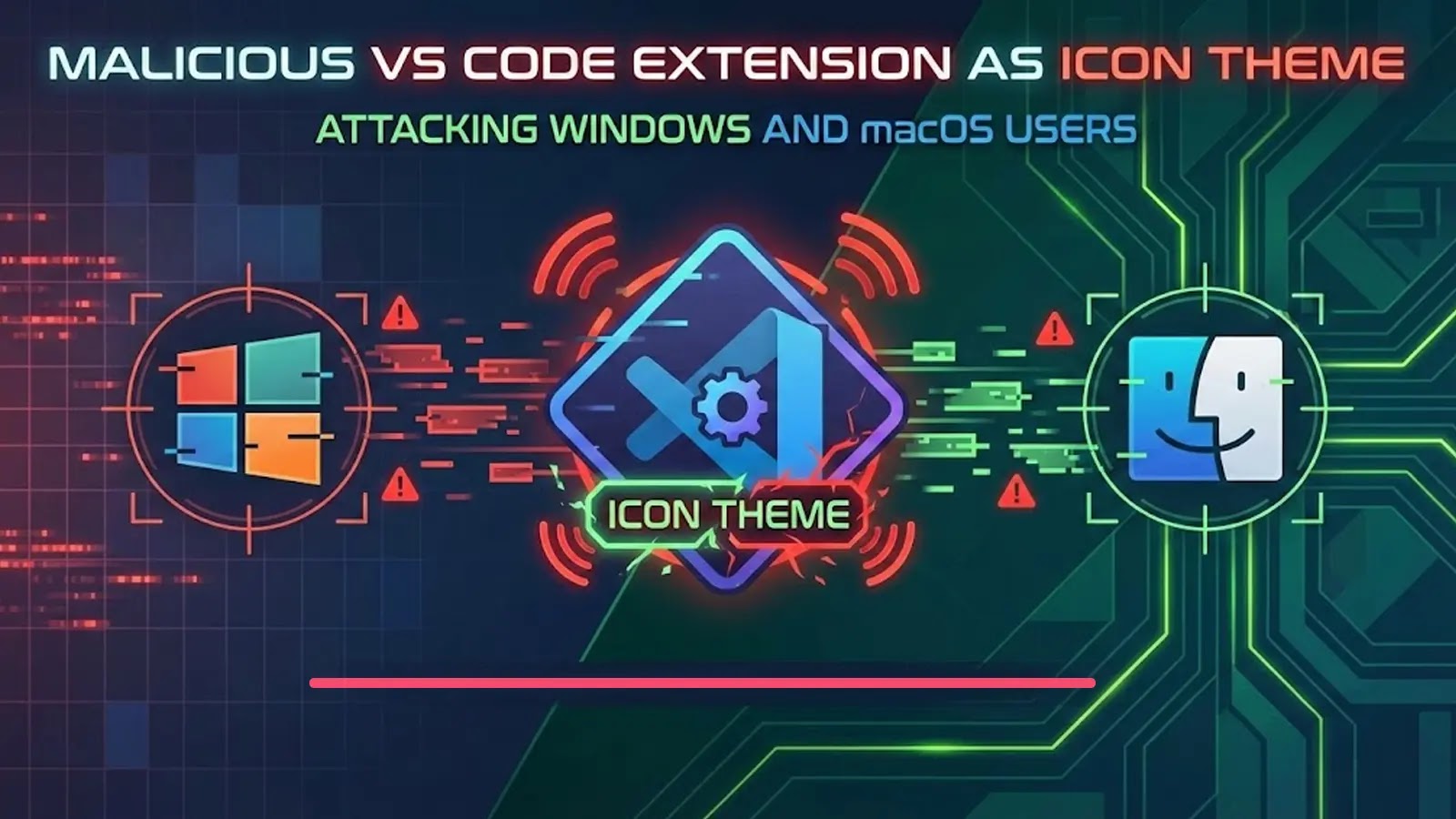
Malicious VS Code Extension Masquerades as Icon Theme to Attack Windows and macOS Users
A recent cybersecurity investigation has uncovered a malicious Visual Studio Code (VS Code) extension that disguises itself as the widely-used Material Icon Theme. This deceptive extension targets both Windows and macOS users, transforming a seemingly harmless add-on into a covert backdoor.
Deceptive Distribution and Functionality
The fraudulent extension was distributed through the official VS Code Marketplace, embedding backdoored files that provided attackers with direct access to developers’ workstations upon installation. Once installed, the extension functioned identically to the legitimate Material Icon Theme, effectively concealing its malicious intent and leaving users unsuspecting.
Technical Breakdown of the Malicious Components
Upon closer examination, security researchers from Nextron Systems identified that the extension contained two Rust-based implants designed to execute native code on both Windows and macOS platforms. These implants were programmed to communicate with a remote command server, enabling attackers to issue commands and deploy additional payloads.
The malicious components were embedded within the extension’s directory structure, specifically in a loader script named `extension.js` located in `dist/extension/desktop`. Adjacent to this script were the native payloads: `os.node` for Windows and `darwin.node` for macOS. This strategic placement allowed the malicious files to mimic the legitimate extension’s folder hierarchy, further evading detection.
Activation and Command Execution
The activation process of the malicious extension is initiated when VS Code loads the extension. The `extension.js` script determines the operating system and loads the corresponding Rust implant:
“`javascript
function activate() {
const bin = process.platform === win32 ? os.node : darwin.node;
const native = require(__dirname + /desktop/ + bin);
native.run();
}
“`
Once activated, the native code reads data from a Solana blockchain wallet address, which serves as a resilient command-and-control (C2) channel. This method complicates efforts to block or trace the malicious communications. The implant base64-decodes the data and contacts a command server to download an AES-256-CBC-encrypted JavaScript file.
Alternative Command Retrieval Mechanism
As a contingency, the malicious extension employs an alternative method to retrieve commands. It accesses a hidden Google Calendar event that stores the payload URL, utilizing invisible Unicode characters to conceal the information. This multi-faceted approach ensures the persistence and adaptability of the attack, even if one command retrieval method is disrupted.
Implications and Recommendations
This incident underscores the critical need for vigilance when installing extensions, even from official marketplaces. Developers are advised to:
– Verify Extension Authenticity: Before installation, thoroughly research and confirm the legitimacy of extensions.
– Monitor for Unusual Activity: Be alert to unexpected behaviors or system anomalies that may indicate malicious activity.
– Implement Security Measures: Utilize security tools capable of detecting and mitigating such threats.
By adopting these practices, developers can better protect their systems and data from sophisticated cyber threats.