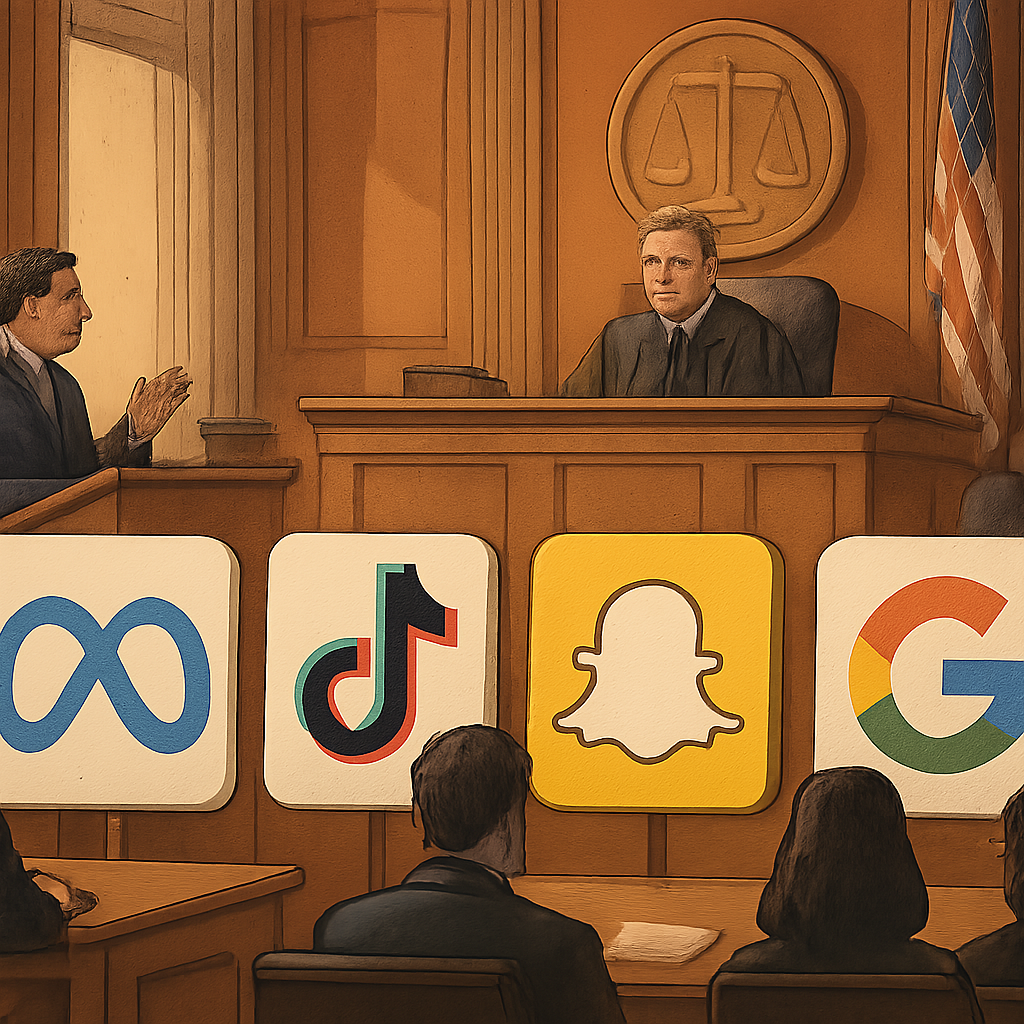
Major social media companies, including Meta Platforms, TikTok, Snapchat, and Google, are confronting a series of lawsuits alleging that their platforms are intentionally designed to be addictive, particularly to minors. These legal actions have been consolidated into a federal suit, reflecting the widespread concern over the impact of social media on youth mental health.
Recently, the 9th U.S. Circuit Court of Appeals in San Francisco denied the companies’ attempt to dismiss these lawsuits. The firms had argued that Section 230 of the Communications Decency Act, which typically shields online platforms from liability for user-generated content, should also protect them from claims related to their platforms’ design choices. However, the court determined that such an appeal was premature, as this type of defense is usually considered post-trial.
In a related development, a New Mexico state court ordered Meta to pay $567 million and implement reforms to better protect users under 18. This ruling followed an earlier $375 million judgment, bringing Meta’s total liability in the state to $942 million. The court found that Meta knowingly harmed children’s mental health and failed to address child sexual exploitation on its platforms. As part of the ruling, Meta must reduce addictive platform features, enhance age verification, address child exploitation, and launch an educational campaign in New Mexico. Of the awarded funds, $420 million will go toward treatment services for youth, with the remainder allocated for prevention and support programs. Meta plans to appeal, asserting its efforts to safeguard users, while maintaining investor confidence. This case may prompt national dialogue and legal reforms, including reconsideration of outdated federal laws that currently shield tech companies from content liability. Additionally, Meta faces ongoing lawsuits from multiple states and families affected by the platform’s alleged harms to minors. New Mexico Attorney General Raúl Torrez sees this ruling as a crucial step in holding Big Tech accountable.
These legal challenges underscore a growing movement to hold social media companies accountable for the mental health impacts of their platforms, especially on younger users. The outcomes of these cases could set significant precedents for the tech industry, potentially leading to stricter regulations and design changes aimed at mitigating addictive behaviors.